Updated July 13, 2026 03:51PM
How Courtney Dauwalter, Ludo Pommeret Won the 2026 Hardrock 100
Multiple-time champs Ludo Pommeret and Courtney Dauwalter reset their own course records at unprecedented ages thanks to something we can all work on: experience.
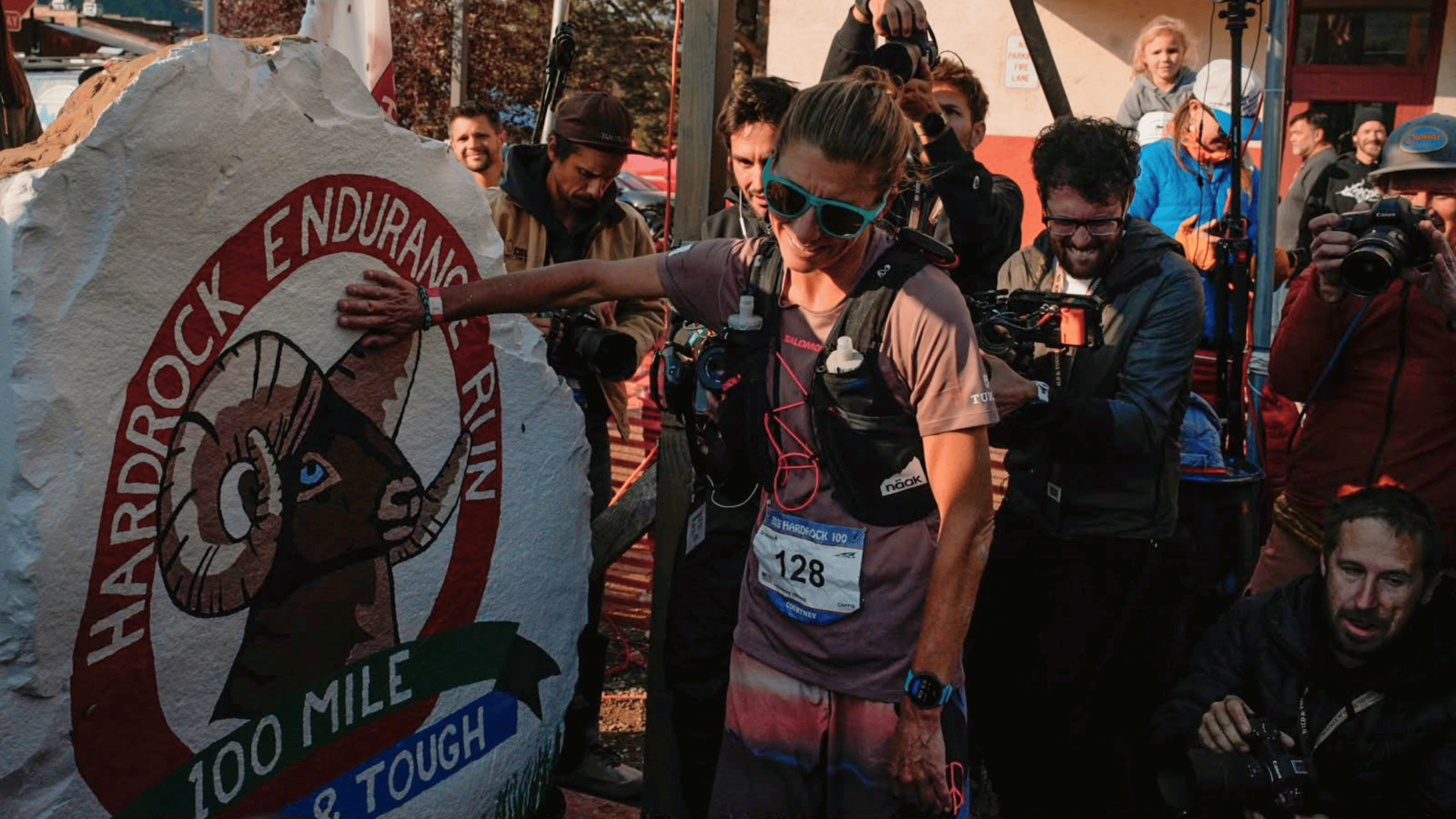
(Photo: Jacob Zocherman)
Courtney Dauwalter made it 65 miles into the 2026 Hardrock 100 before her stomach turned. Not coincidentally, that coincided with reaching the course’s high point—14,058-foot Handies Peak—just after sunset.
The Hardrock 100 is a behemoth 101-mile loop through Colorado’s San Juan mountains, and it changes direction every year. Running in the clockwise direction this year, the elevation profile of the first half looks like an EKG, with four formidable spikes in the first 30 miles.
But the three-time winner had looked indomitable, running well under her own clockwise course record pace on a sunny, warm day as she climbed and descended with her characteristic smile on her face, high-fiving the kids waiting alongside the Ouray aid station. The was just after she met with her sole crew member, her husband Kevin. (Curiously, Dauwalter chose to forgo a big crew and didn’t pick up any pacers, as she’s done here in the past, instead keeping it simple like her in early ultrarunning days.)
ADVERTISEMENT
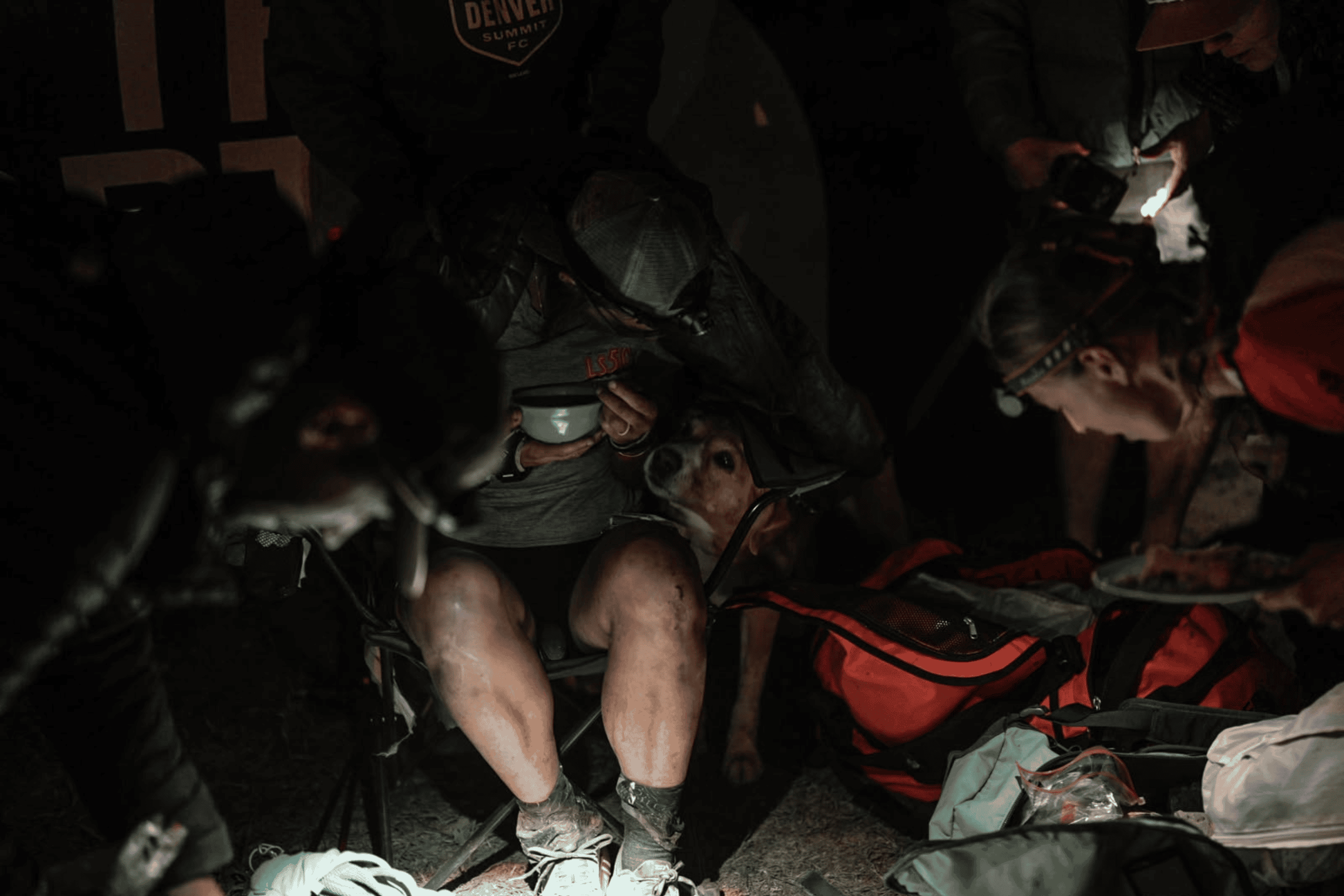
Nighttime wasn’t so friendly. Fuel wasn’t going (or staying) down as she negotiated the endless technical singletrack by headlamp coming down Handies. Running on fumes, she had to fight for every step.
“I spent the night fertilizing the course quite a bit,” Dauwalter said at the finish line.
Perhaps no one in the sport is more familiar with this particular flavor of the pain cave: battling through discomfort and fatigue en route to a record-setting performance. The 41-year-old has been racing and winning ultramarathons for the past decade-plus with remarkable consistency. But Hardrock has proved a particularly tricky puzzle, even as she wins it, and it’s one that keeps her coming back.
“It’s just a really hard course in a lot of ways, and I don’t think we’ve fully learned all of the things that it has to teach us out here,” Dauwalter says. “Every time we’re here, we just get reminded about how big the mountains are and all the puzzle pieces involved in this particular course.”
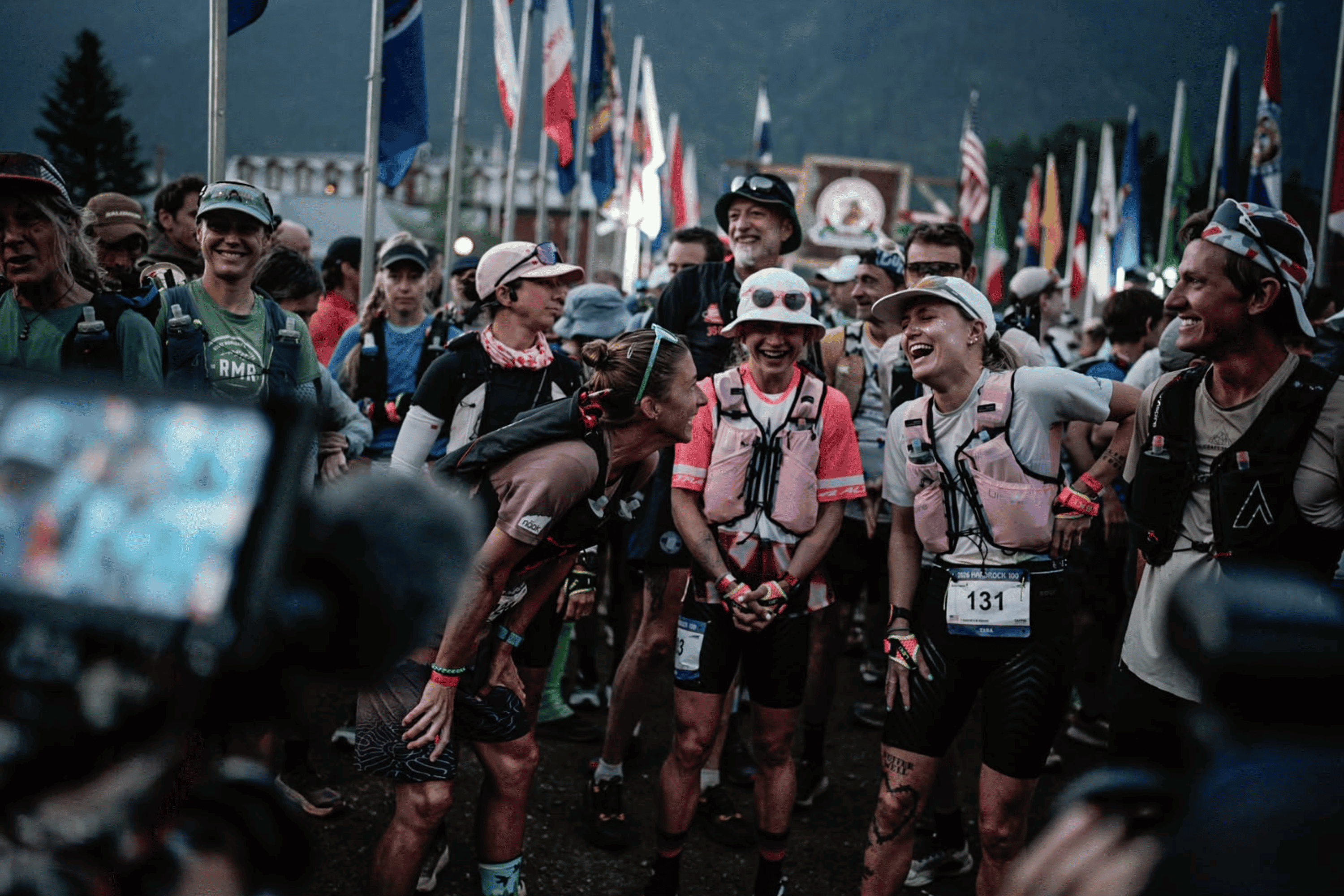
Dauwalter was 36 when she first lined up at Hardrock in 2021. She’d already notched wins at the Western States 100 and Ultra-Trail du Mont-Blanc (UTMB), the two biggest 100-milers in the world. And yet, that first attempt resulted in a DNF. Every time she’s run Hardrock since, she’s won, including her legendary Western States/Hardrock/UTMB triple crown in 2023. This year, she came to the race just two months after grinding out a second-place finish at the Cocodona 250, a different kind of double.
“I wasn’t sure going into it if I would still be tired, or how 250 miles would have impacted my body or my brain, but it seemed actually fine,” Dauwalter says. “It was cool to be training for Cocodona, but in my head, the whole time I was also training for mountains and adventures and just getting out there. So it all felt like it was leading to Hardrock as well.”
ADVERTISEMENT
After pushing through her GI distress through the night, Dauwalter arrived in Silverton and kissed the rock eight minutes faster than she had two years ago. While she was disappointed to not break 26 hours, the number that has prefixed her times at each of her three finishes, her result is testament to another puzzle piece put into place. At a “post-graduate”-level event like Hardrock, even the incremental gains are hard-fought.
Wisdom for the Win
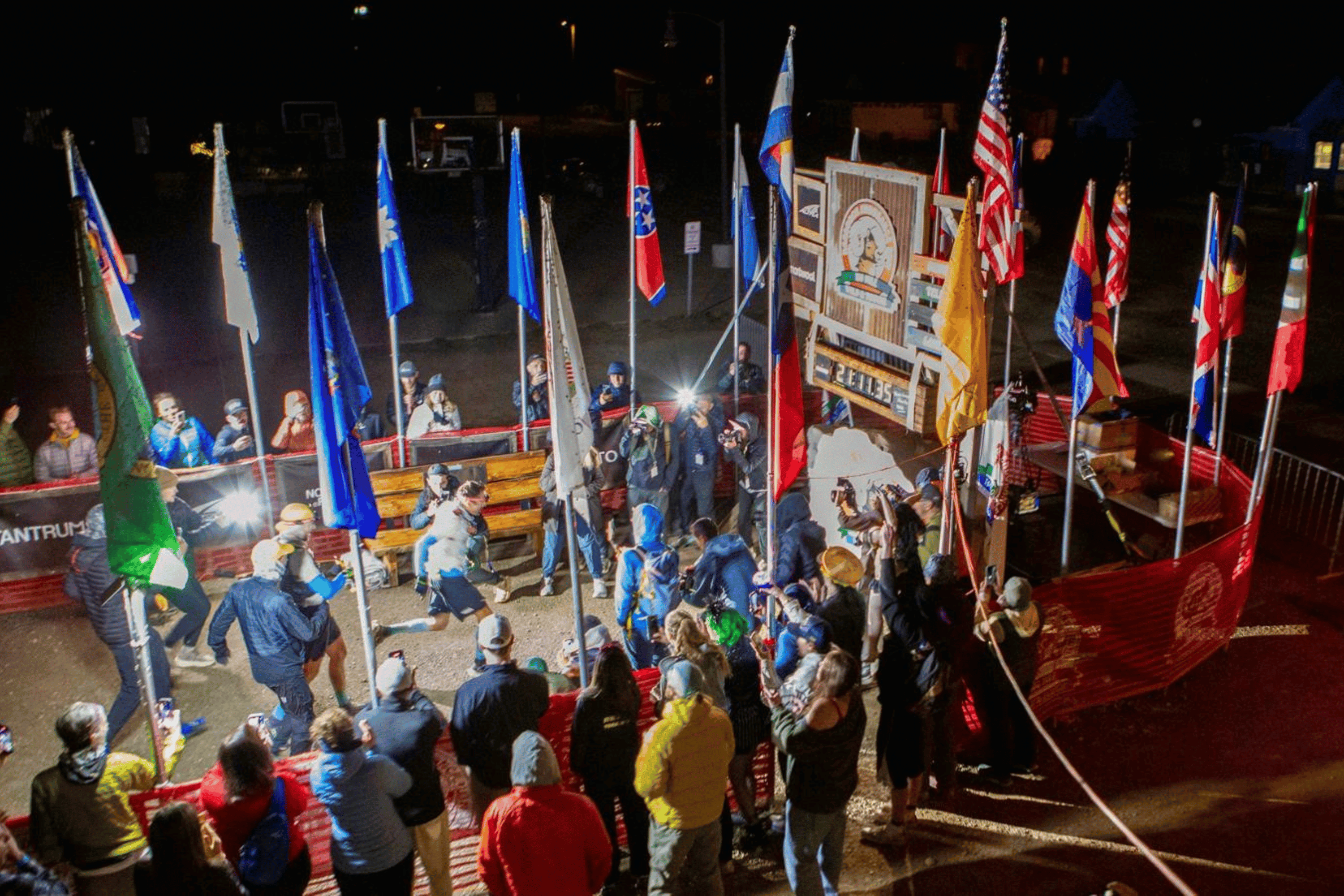
If you think it’s impressive for a 41-year-old to win an event of this caliber in this era—and it is—consider Ludo Pommeret, who at a week shy of 51 won the men’s race for the third year in a row. The retired French air traffic controller kissed the rock in 21:11:36, besting his own clockwise (and overall) course record by nearly 22 minutes.
For comparison, no one in the modern era of ultrarunning has won UTMB or Western States in their 40s, much less their 50s. This year, the average age on the start line of Hardrock was 47, and the youngest finisher was 30. But tackling a course with 33,000 feet of climbing and descent, with an average altitude of about 11,000 feet, through the night in yo-yoing mountain conditions, requires hard-earned wisdom.
ADVERTISEMENT
“There’s so much that you can gain by having a lot of experience,” Hardrock 100 race director Dale Garland says. “The longevity, the experience, and the patience, I think at Hardrock you have to be very patient.”
Sitting at the finish line a little after 3 a.m., over two and a half hours before second-place Jimmy Elam would come to the line, Pommeret told Garland he’s looking forward to coming back next year.
“It took me five years to get the bib here, and when you win the race, you have the bib for next year. That’s why I come back,” Pommeret says.
Pommeret, who won UTMB in 2016 and has finished fourth, fifth, and sixth there the last three years, claims he is not a runner. When he comes to Colorado a few weeks before Hardrock each year, he enjoys hiking, drinking from streams, and sleeping in the back of the car so he can move around whenever he wants.
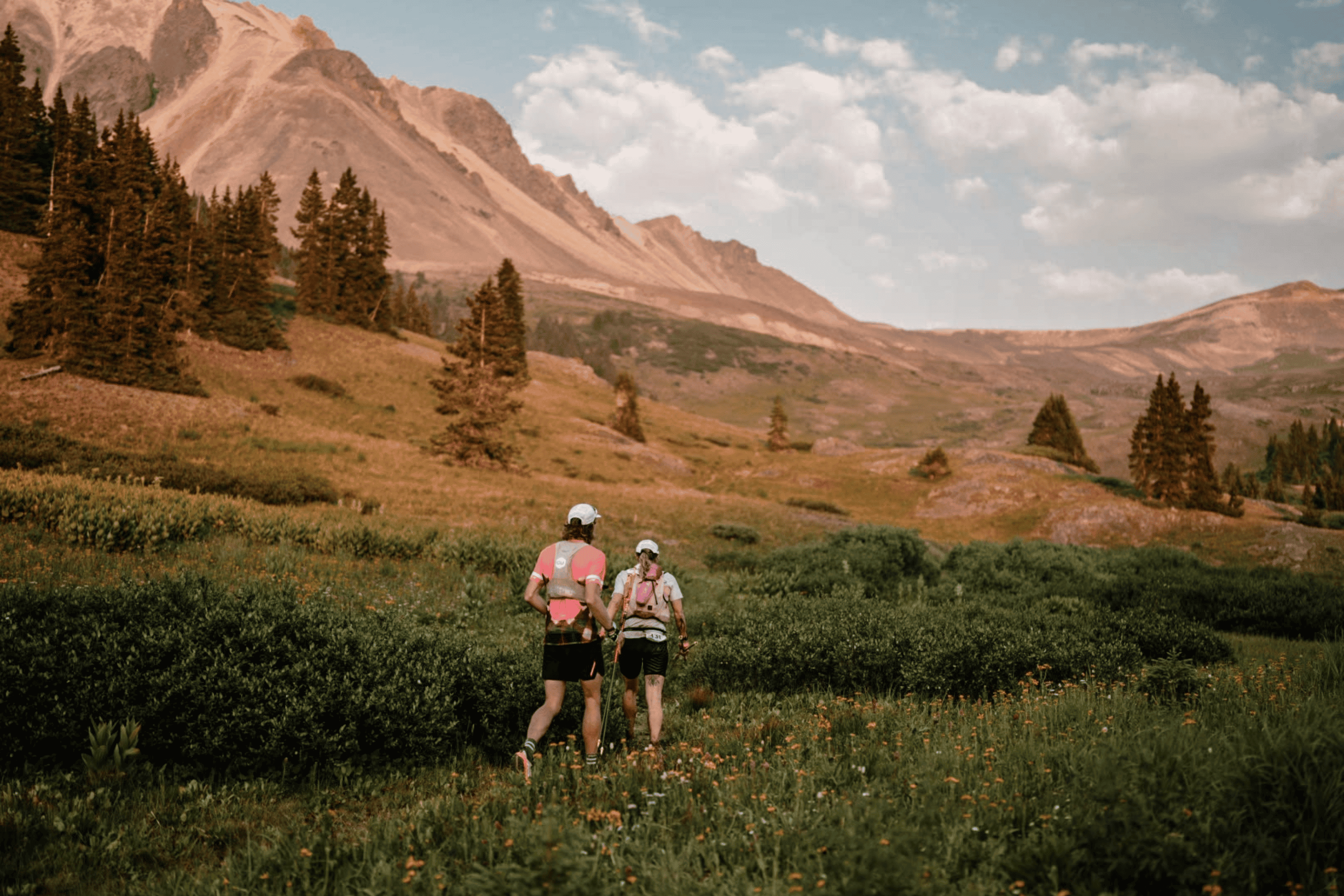
“For this acclimatization part, you should not push too much, just take it easy. If you are lucky, you see wildlife,” Pommeret says. “I like to be in these mountains.”
ADVERTISEMENT
Like Dauwalter, Pommeret learns something new every time he comes back. This year, he gapped the field early on—over half an hour by mile 40. That unrelenting pace got the best of another pre-race favorite, defending UTMB champion Tom Evans, who dropped just after the half way point.
Meanwhile at night, which Pommeret says is no different than the day thanks to his strong headlamp, he expanded that lead by two more hours, pushing all the way to a sprint finish. His willingness to push himself is born out of an intimate knowledge of the course’s effect on him.
“To have more experience with how my body reacts to altitude, I gain some confidence in myself. But it could be dangerous, because I was pushing a bit harder than two years ago, and I didn’t know if I could keep the pace until the end,” Pommeret says. “It’s a risk, but you have to play sometimes.”
What’s Next for the Smallest Biggest Race in Ultrarunning

Pommeret’s adventurous spirit embodies the ethos of Hardrock. Exploring both the jaw-droppingly gorgeous and grueling landscape and the limits of one’s body and mind is at the core of Hardrock’s appeal for the first and the last to kiss the rock alike. That playful, curious ethos extends to everyone present, the majority of whom aren’t even pinning on a race bib.
ADVERTISEMENT
Due to a confluence of factors such as land-use permits and environmental stewardship, the start list is capped at just 147 runners—that’s about one-twentieth the size of UTMB. But this year, Hardrock volunteers outnumbered runners four to one. In a coffee shop in Ouray and a sports bar in Silverton, locals and unsuspecting tourists tuned into the livestream playing on the TV. Spectators lined the course at the top of hard-to-reach mountain passes to cheer.
Katharina Hartmuth, who placed third at last year’s Hardrock, took it even further, strapping a stuffed Cookie Monster holding a sign that read “You are awesome” to her pack as she traversed the course’s final 25 miles in the reverse direction overnight, handing stickers out to runners along the way.
To the runners and the tight-knit, grassroots community, Hardrock is an annual coming home. Case in point: Jason Schlarb, who tied for the win hand-in-hand with Kilian Jornet in 2016, got another coveted entry into the event this year. But as the July 10 start approached, there was just one problem—his wife Whitney was on the verge of giving birth. She gave Schlarb her blessing. And as he contended with the course en route to a 34:44:16, 19th-place finish, she welcomed their daughter into the world.
ADVERTISEMENT
Garland delivered the good news at Sunday’s three-hour breakfast and awards ceremony, an event that took place immediately after 48 hours of sleeplessness as he welcomed runners to the finish.
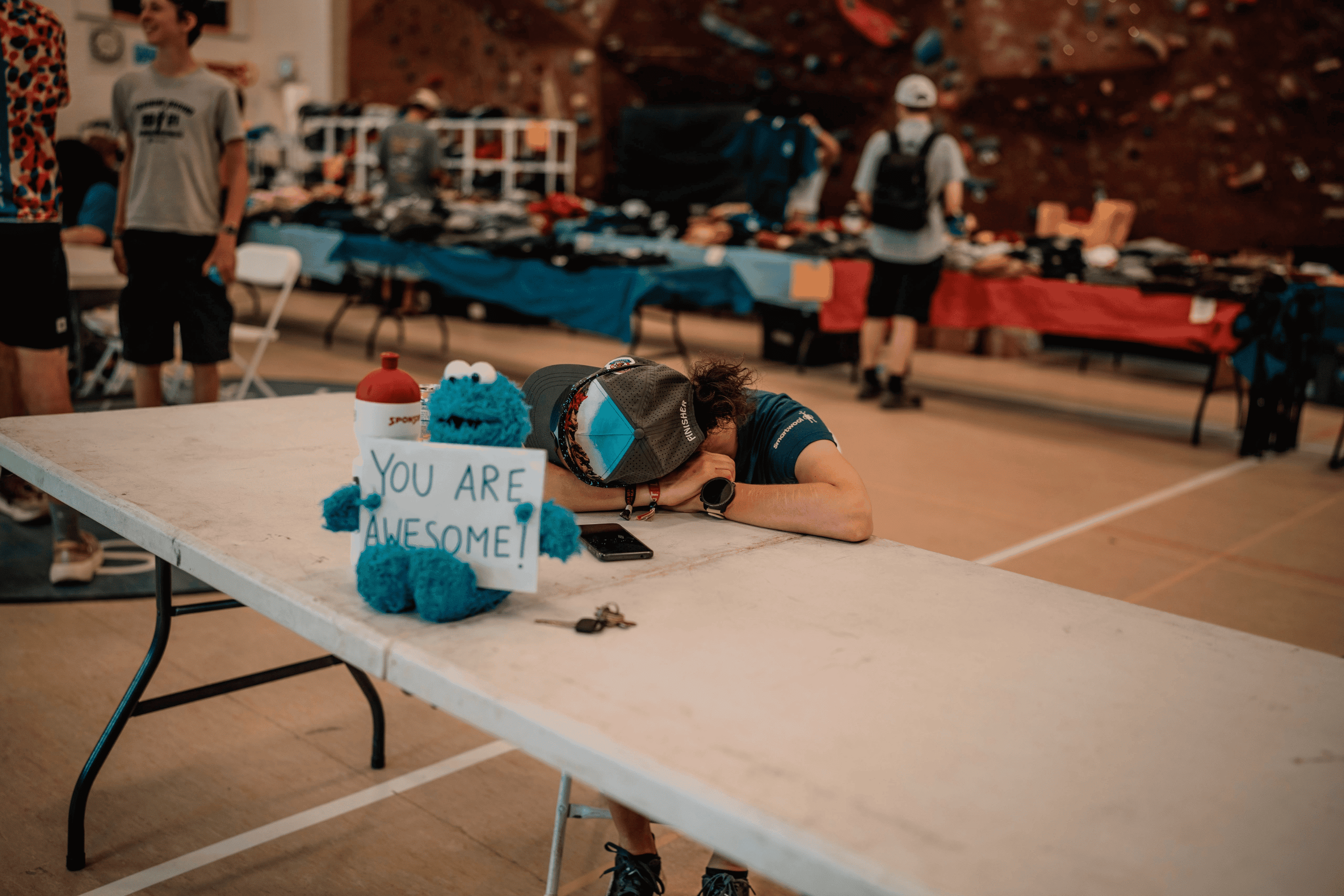
That gritty hospitality is an immutable fixture of a run cautiously evolving with the times. When Garland and friends put on the inaugural Hardrock in 1992, there was no convoluted lottery, no qualification system, no livestream, just 18 runners looking to do something crazy. Thirty four years later, drones broadcasted live aerial coverage of the run to a global audience, and the field was assembled from thousands of applicants.
The process of getting into the race is changing, too. The lottery system, which requires runners to have significant mountain running experience and currently caps the number of women selected based on the percentage of women who applied, is under review as a part of a five-year strategic plan, Garland says.
ADVERTISEMENT
Regardless of what the future holds, runners will still meet in the Silverton High School gymnasium for the pre-race meeting. Winners and back-of-the-packers alike will continue to come back to test themselves in the mountains. And Garland and the rest of the board will try to adapt with the times.
“I want this race to still be a race that is based on values that are important to us, about how we treat runners and the land and that kind of thing,” Garland says. “But I also want it to be an organization that is nimble enough to adapt to change and not afraid of change.”
2026 Hardrock 100 Results – Women
| Courtney Dauwalter (Leadville, CO) | 26:03:10 |
| Careth Arnold (Paonia, CO) | 30:32:31 |
| Tara Dower (Durango, CO) | 33:02:04 |
| Bailey Eppard (Colorado Springs, CO) | 35:41:59 |
| Kaci Lickteig (Omaha, NE) | 36:12:17 |
2026 Hardrock 100 Results – Men
| Ludovic Pommeret (Prevessin, France) | 21:11:36 |
| Jimmy Elam (Midway, UT) | 23:48:56 |
| David Ayala (Bozeman, MT) | 24:28:17 |
| Ryan Smith (Boulder, CO) | 25:45:37 |
| Arlen Glick (Massillon, OH) | 26:41:17 |