Updated August 26, 2026 12:06PM
If you buy through our links, we may earn an affiliate commission. This supports our mission to get more people active and outside.Learn about Outside Online's affiliate link policy
The Coolest New Trail Running Gear at UTMB 2026
Two of Trail Runner’s editors are on location in Chamonix, France, sorting out the most interesting trail running gear from piles (and piles) of stuff at 2026 UTMB race week.
(Photo: Abby Levene)
New Trail Running Gear at the UTMB Expo 2026
While there’s been no shortage of budget-busting brand activations in Chamonix this week, some of the most interesting products required good, old-fashioned shoe leather (no, there were no leather shoes, sorry). Fortunately, editors Chris Foster and Abby Levene have been on the ground in Chamonix, getting some extra steps in to scratch beneath the glitzy surface for stuff that’s actually…cool.
Trail Runner’s editors braved the labyrinthine expo, sat through sometimes bizarre release events, and actually touched the stuff we’ll be seeing for sale soon. Read on for the coolest new trail running gear, as seen at UTMB 2026.
Black Diamond x Norda 000 Shoes/Entire Collection
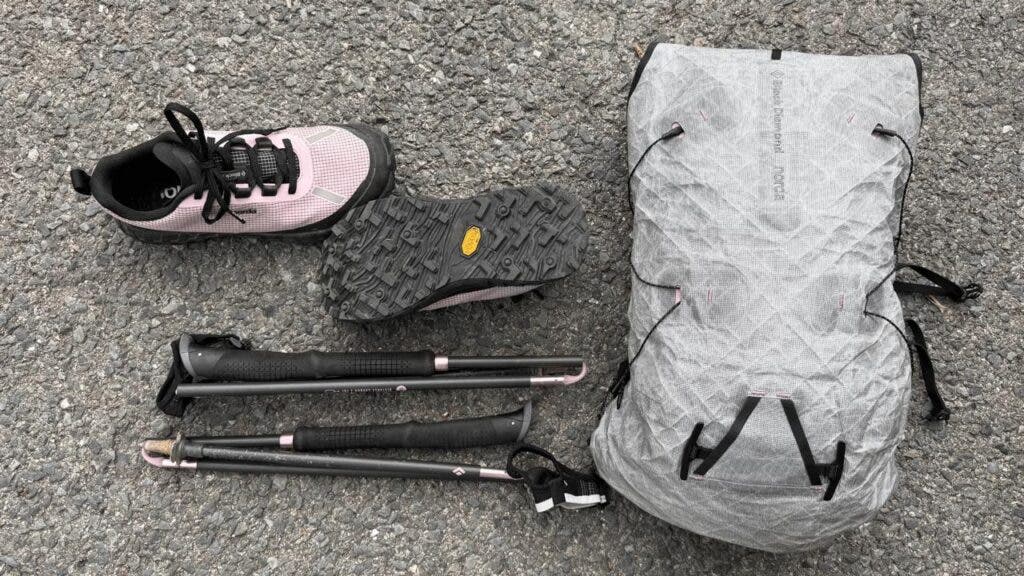
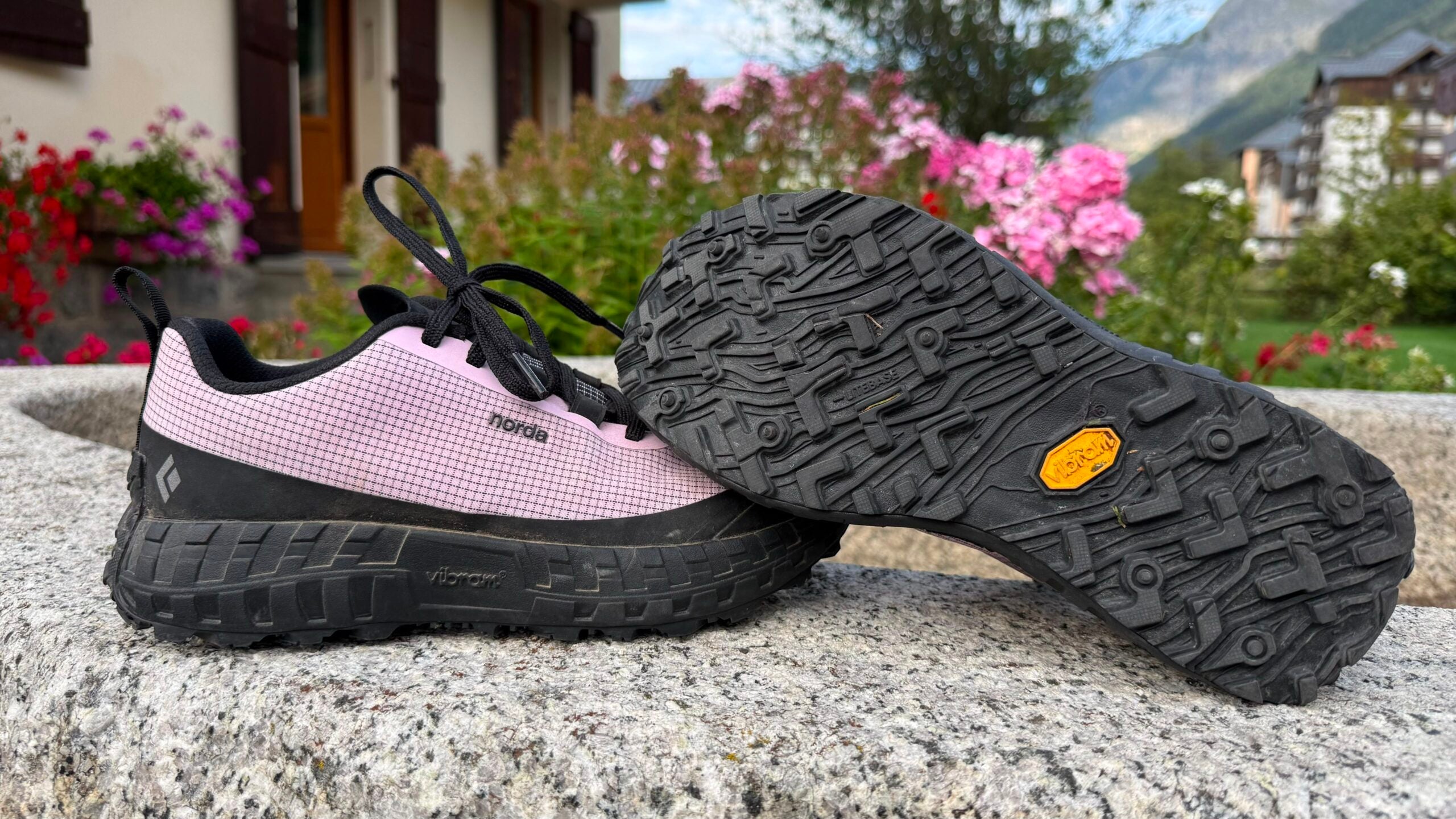
We’re pretty obsessed with this entire collection, which officially debuted on August 26 in Chamonix and we’ve had the good fortune of testing for the past several weeks—including for a full lap of the Tour du Mont Blanc last week. Black Diamond’s mountain heritage combined with Norda’s obsession over quality trail running shoes just makes sense. Don’t even get me started on the Distance 15 FKT pack (fits like a glove) or the Distance Carbon Z FKT poles (the magnetic glove system is genius!). Plus the poles can be stored on either side of the pack thanks to clever slots in the Dyneema fabric. But these shoes also deserve special shine.
The Black Diamond x Norda 000—named to signify the start of a long relationship between the brands—features a Dyneema mesh ripstop upper (seemingly very durable), recycled Dyneema laces (tacky but supple), and a sufficiently wide toebox to let my toes splay the way they want to. The midsole is made from a new Vibram compound (Stream Flow) that’s non-supercritical EVA, lending plenty of return for a mountain shoe and the promise of durability. (Although I haven’t run in them enough yet to confirm whether that’s actually true.) And a Vibram Megagram outsole with 5 mm lugs provides plenty of bite on rocky terrain.
It’s a great-looking mountain shoe with quality materials and craftsmanship to hopefully last long enough to make the $295 price tag worth it. My only complaint is the sizing. Buyer be warned: They run super small. I sized up a full U.S. size in these.
– Abby Levene
New CamelBak Glide, Apex Pro, and Belts
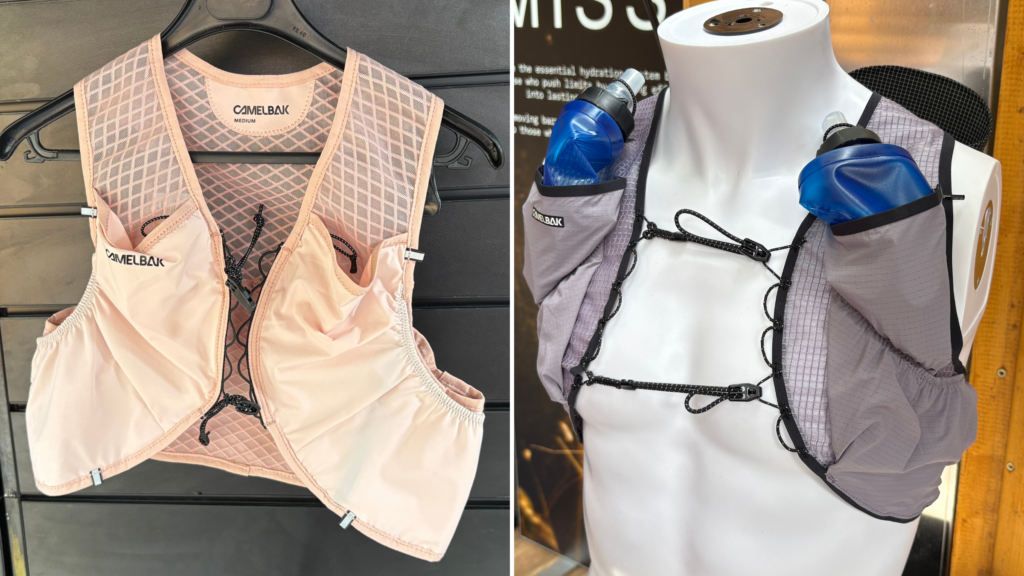
OK, I’ll admit it’s a bold move to put a CamelBak product up top, as CamelBak is more like your aunt’s hydration pack—maybe you’d gift an old one to a friend, but certainly not something you’d buy to tackle a big, ultra-hot off-road effort. But that’s exactly why what I saw in an otherwise unassuming booth in Chamonix stopped me in my tracks. I actually thought someone had snuck a Salomon or Raid vest into their space. In fact, the CamelBak rep even compared the new Apex Pro and Glide to Salomon, and you don’t have to squint too hard to see how closely they resemble the Raid line as well.
Gone are the dated stylings and ’90s colorways—along with materials that feel similarly from another century. It’s a good guess to say that CamelBak has a way (way) bigger audience in the hiking and cycling spaces, but I’d actually wear either of these great-looking (and feeling) CamelBak running packs, and that’s not something I could say two weeks ago.
The materials were feather-light, with thin mesh covering only the places where there weren’t actually pockets, and while the pricey $230 Apex Pro was definitely lighter (and had a nifty pole bag accessory attachment point), the $185 Glide was still plenty breathable and light—far better than anything I’d seen from CamelBak before. Might be time to start reconsidering CamelBak for long-distance trail running, but sadly we’ll all have to wait until next spring to get our hands on one.
– Chris Foster
Rossignol Vezor Race Department
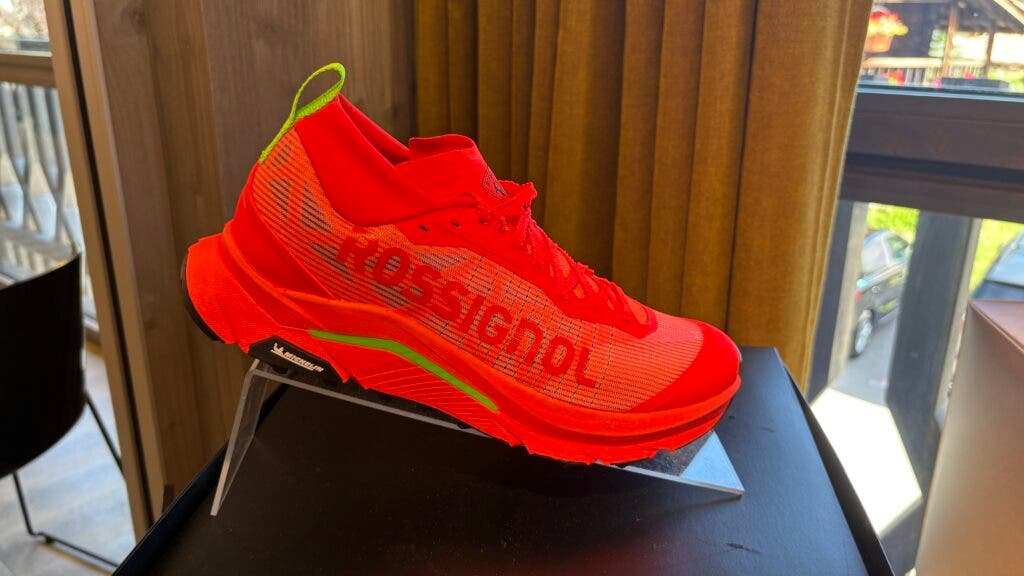
Speaking of super lightweight and mesh-thin gear, I got a sneak peak at the just released lighter, racier version of the (also new and well-loved) Vezor, the confusingly named Vezor Race Department. I can’t quite wrap my head around the naming convention—and honestly it wasn’t the weirdest-named shoe I saw this week—but I was impressed with the upgraded Matrix Kevlar mesh upper and bootie construction, above and beyond that the Vezor already has. It also includes a minor upgrade with serrated laces, but I’ve loved that style on the Brooks Cascadia Elite for a whole year now. That said, it shares both the laces and bootie style (plus some Matrix material, but it looks like the Rossi has more) with the Cascadia Elite, so it’s in good company.
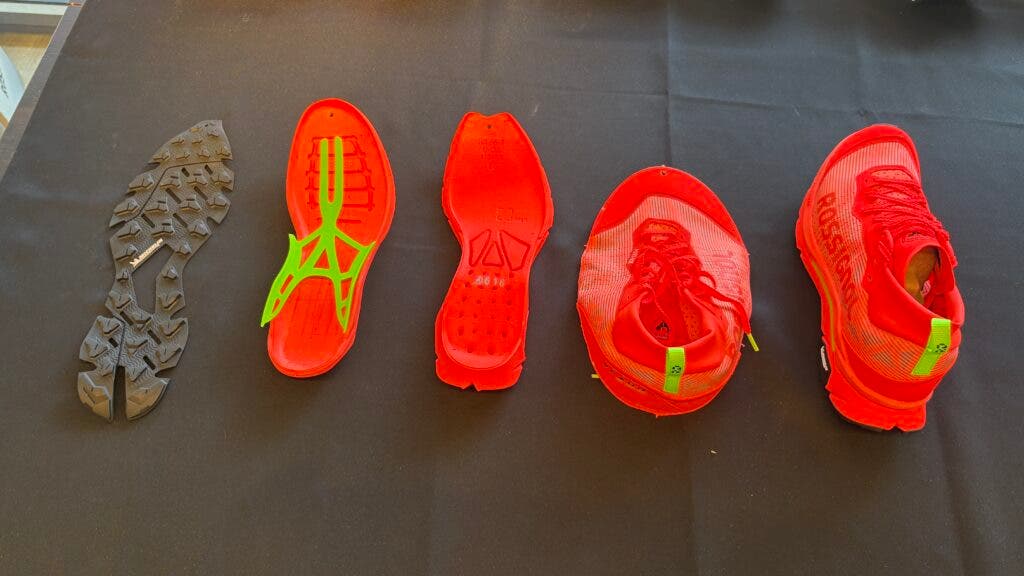
According to Rossignol, the upper helps with stability, and I did like the looks of the Michelin 4-5mm lugged outsole. That said, I wasn’t lucky enough to score a pair, but I’d say it’s one of the pairs I’m most interested to try in the next six months. For everyone else, you’ll have to fork over $220 when it’s released in February 2027.
– CF
RUMM Fuji Long-Distance Shorts, Tights, and Short-Distance Shorts
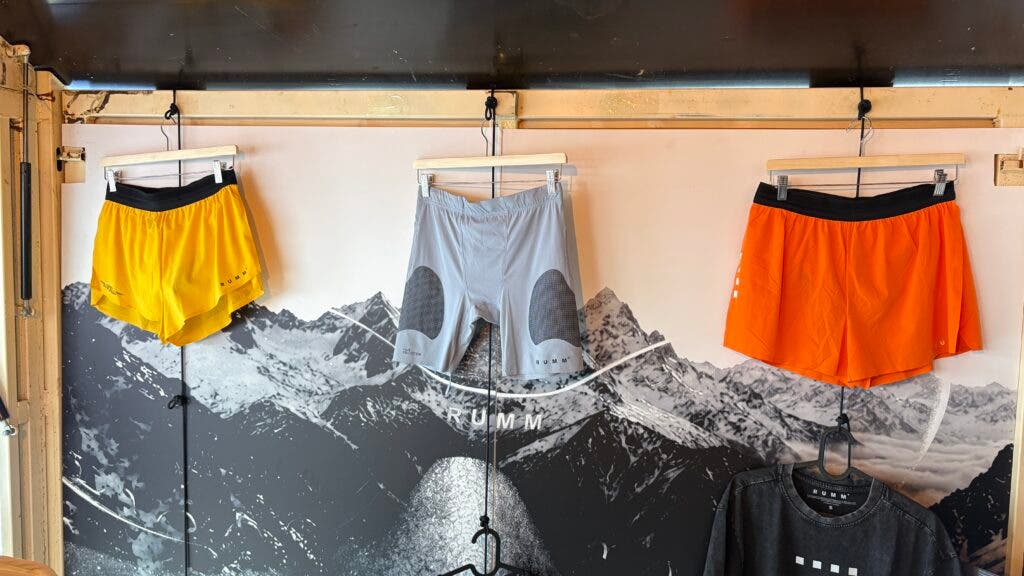
One of my favorite things about the UTMB expo is going to the smaller booths—that’s where you can unearth some real treasures. Last year, I ID’d this bizarre inflatable puffy jacket from Goldwyn (who, by the way, had upgraded to The Big Part of the Expo this year).
This year, I’ll be honest, I wandered into the RUMM (Running Under Major Meaning) tent because I spotted a few shirts that looked distinctly Satisfy. It was cropped, oversized, and, of course, full of holes (as we do now). I had thought I might get a chuckle around a Satisfy wannabe, but I was pleasantly surprised when I saw more than just high fashion—and at about 1/4th of the price of Satisfy’s high-fashion price tags.
My favorite pieces were easily their shorts: an ultralight lined pair called the short-distance Rumm shorts that looked like water would just slip off, a fully pocketed pair called the Fuji long-distance shorts, and a super-interesting pair of tights with all sorts of pockets and little patches on the thighs to help you push down your legs on crazy-steep sections. Each piece seemed well-made and thoughtfully designed. But (maybe) the best part? The first two pairs are only $65 and the tights are $70. Given the design and quality, I wouldn’t have blinked at plopping down twice that much—watch out Satisfy.
– CF
Scarpa Alien Ultra
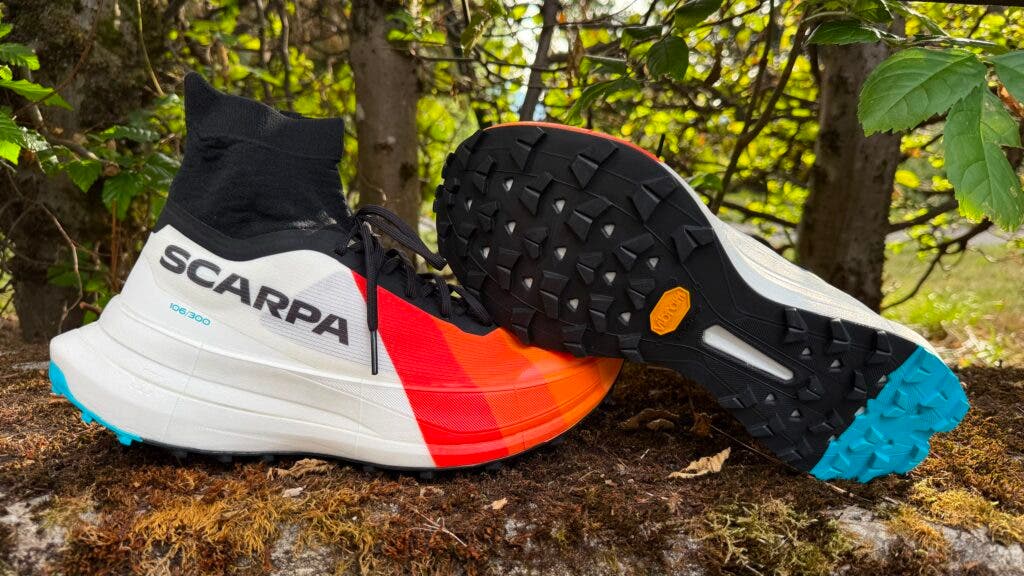
Ski mountaineers will recognize the name Scarpa Alien as one of the best skimo boots on the market. So the Italian footwear brand is making quite the statement by bringing the name over to trail running, which it did by unveiling the Scarpa Alien Ultra during UTMB week. Alien is indeed an apt name for this light trail running shoe: There’s a long integrated gaiter (the shoe comes with a shoe horn), serious rocker, and forked heel that makes it look otherworldly before you even get it on your foot.
Speaking of getting it on your foot, that’s a taller task than your typical running shoe. But I didn’t have to resort to the shoe horn. (I had to work pretty hard to loosen the laces, but that comes with the added benefit of them staying put once they’re laced up.) It’s incredibly springy and light-feeling underfoot, and surprisingly stable feeling for a shoe with 38-32 mm stack. That’s thanks to the forked heel, gaiter, and some mesh structure in the upper. I haven’t had a chance to run in them yet, but bouncing around you certainly feel the cushy trampoline effect of the super critical A-TPU plus Pebax nylon-carbon plate. So far the Scarpa Alien Ultra seems like a surprisingly promising ultra-distance trail racing shoe. Stay tuned.
– AL
Garmin Fenix 9
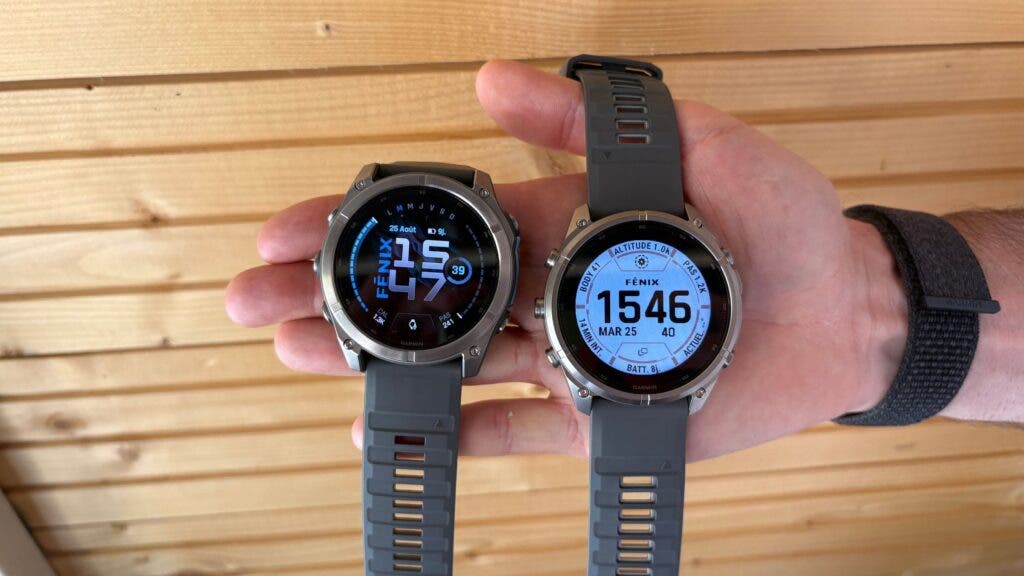
This one was a little bit of a surprise (in some ways). I hadn’t heard much from Garmin lately, and a new number in their popular high-battery, trail-focused Fenix line is usually a reason for some big fanfare. It was a good surprise, as it’s been a minute since the Fenix 8 sat on my arm.
That said, while I didn’t get a chance to try it (yet), the $1,000 entry point and no features that truly jump out at me, I’m most interested in what actually differentiates it from the last version. From what I can tell, the big selling points are a brighter screen, better training tools, and some admittedly cool 3D-looking topo maps that would help in places exactly like Chamonix. The rest doesn’t scream “THIS IS NEW AND BETTER.”
However, I am looking forward to seeing how it stacks up to the competition, and my best guess is that the 51mm Fenix 9 Pro is going to be the best intersection of price ($1,200), looks (much more polished than the non-Pro in my opinion), and battery life (31 days of daily use, 45 hours max GPS). I can’t find much use for the non-AMOLED version, as there are nearly as good non-AMOLED watches for half the price, but I’m looking forward to giving the 9 Pro a spin!
– CF
Lesseau Soap Discs
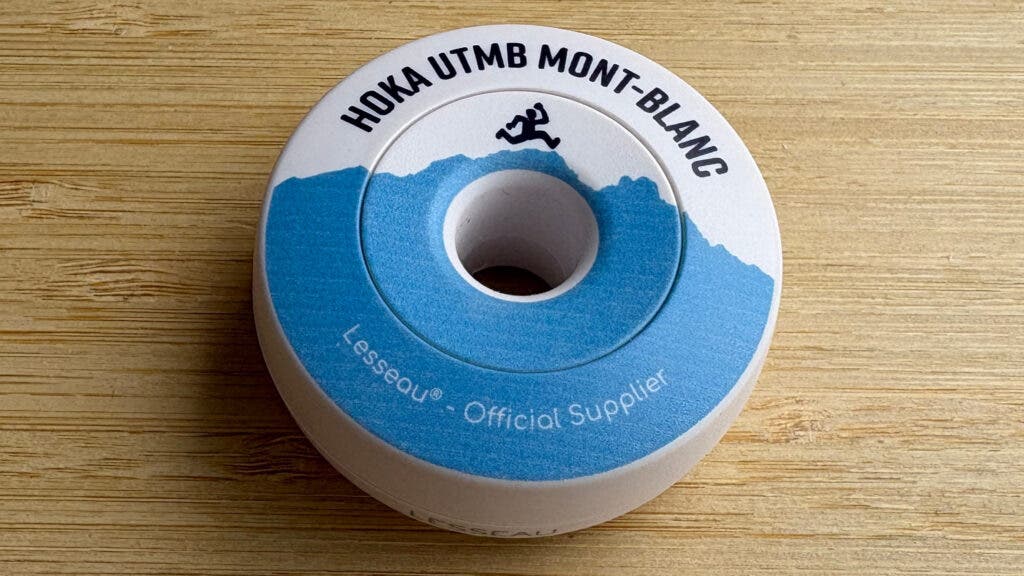
Ok, I’ve got a few weird ones in here. This product jumped out at me because it looked like someone was selling skateboard wheels at a trail running expo. Sadly they weren’t skateboard wheels, but they were a pretty novel solution to a pretty common problem for multi-day runners, backpackers, and race directors.
Lesseau is a Dutch brand that realized two major problems with traditional liquid hand soap: liquid soap is made up mostly of water (with some soap mixed in) and it came in gnarly, polluting plastic containers (to contain, the water-plus-soap mixture). Their solution was to make a dry soap that could be shaved with a little disc (or skateboard wheel) shaped container while on the go. The $10-15 dispensers are tiny, super lightweight, and the soap is biodegradable so you could use it in a stream or lake or ocean without harming the environment.
For those who do destination runs, multi-day runs, or backpack, this is a huge boon; for race directors, the larger dispensers—when paired with a small water jug to wet and rinse hands—reduce a ton of packaging, size, and weight when it comes to setting up handwashing stations. It probably has some other cool use cases, but it was a neat idea anyway.
– CF

